This is a page for the tag Tax Advisory in Poland

Seconding employees to Poland and PIT obligations
Seconding employees to Poland now requires a much broader analysis than simply checking how long an employee will stay in the country. For foreign companies and international groups, the key issue is not only where the employment contract was formally signed, but also who actually benefits from the employee’s work,... Read More →
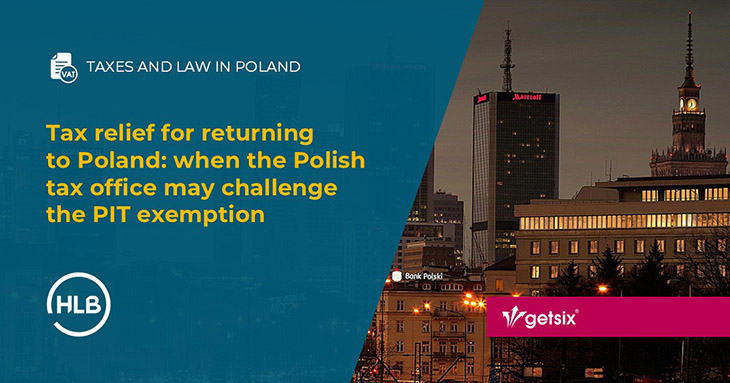
Tax relief for returning to Poland: when the Polish tax office may challenge the PIT exemption
Tax relief for returning to Poland is attracting growing interest from people who, after several years of living and working abroad, move back to Poland. From the taxpayer’s perspective, it is a very specific preference: an exemption from Polish personal income tax (PIT) on qualifying income up to PLN 85,528... Read More →
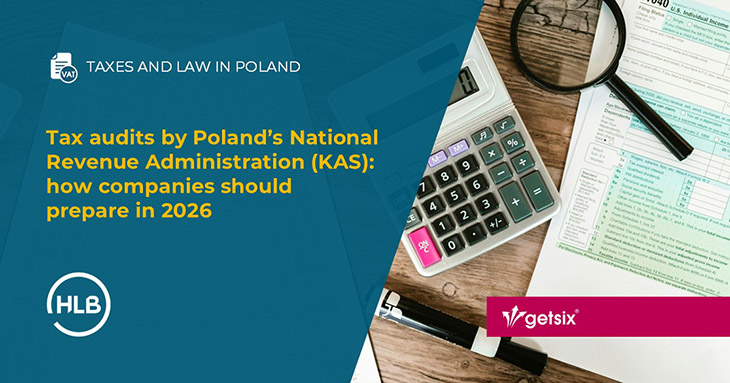
Tax audits by Poland’s National Revenue Administration (KAS): how companies should prepare in 2026
Tax audits carried out by Poland’s National Revenue Administration (Krajowa Administracja Skarbowa, KAS) now look very different from how they did just a few years ago. They are becoming less broad and random, and increasingly precise, data-driven and based on risk assessment and digital reporting tools. For businesses, this marks... Read More →
VAT exemption for intra-Community supplies: what the CJEU ruling means for businesses in Poland
VAT exemption for intra-Community supplies is a key issue for businesses that sell goods to customers in other European Union Member States. The judgment of the Court of Justice of the European Union (CJEU) of 13 November 2025 in case C-639/24 FLO VENEER confirms that a tax authority cannot refuse... Read More →
The National e-Invoicing System (KSeF) structured invoice for non-transaction transfers of own goods to an EU warehouse – is it required?
In Poland, the move to mandatory e-invoicing through the National e-Invoicing System (KSeF) is forcing businesses to revisit VAT scenarios that were previously treated as pure logistics. One of the most sensitive examples is the KSeF structured invoice for intra-Community transfers of own goods — i.e., moving your own stock... Read More →

Partner remuneration for managing the company as hidden profits in Estonian CIT in Poland
Hidden profits in Estonian CIT in Poland are becoming an increasingly practical risk area — especially where a company (or partnership taxed under the Estonian model) settles recurring benefits with its partners. An amending interpretation issued by the Head of the National Revenue Administration (KAS) on 7 November 2025 (ref.... Read More →
Foreigners in Poland: taxes for international employers and foreign employees
Tax obligations for foreigners in Poland rarely come down to just one topic. In practice, you often need to assess tax residency under Personal Income Tax (PIT), run payroll correctly (including employer withholding), determine VAT rules for domestic and cross-border transactions, and confirm when Social Insurance Institution (ZUS) contributions apply.... Read More →
Transfer pricing in Poland in 2026: schemas, forms and reporting changes
In 2026, transfer pricing remains one of the most demanding areas of Polish tax compliance. What matters more than ever is the quality and consistency of financial data reported in the Transfer Pricing Information form (TPR), Country-by-Country Reporting (CbC) and public CbC reporting (PCbCR) — and how well those figures... Read More →
Country-by-Country reporting in 2026 – filing requirements for CbC-P notification and CbC-R report
According to OECD regulations on tax information exchange, multinational corporate groups are required to report their organizational structures and financial results. The purpose of this obligation is to ensure greater tax transparency and to limit aggressive tax optimization practices. What is CbC Reporting? The primary goal of Country-by-Country (CbC) reporting... Read More →
Fixed establishment (FE) for National e-Invoicing System (KSeF) in Poland – MoF guidance of 28 January 2026 and practical implications for businesses
A fixed establishment (FE) is a VAT concept describing a situation where a taxpayer — despite having no registered office in Poland — has a sufficiently stable and organised presence in Poland (people and technical resources) that can genuinely take part in transactions. In Polish tax guidance, this concept is... Read More →